
Tiered pricing
Bundled qualified / mid / non-qualified rates
- Processors group costs into opaque tiers
- Downgrades can spike your effective rate quietly
- Hard to compare processors apples to apples
- Statement audits take longer because fees are buried
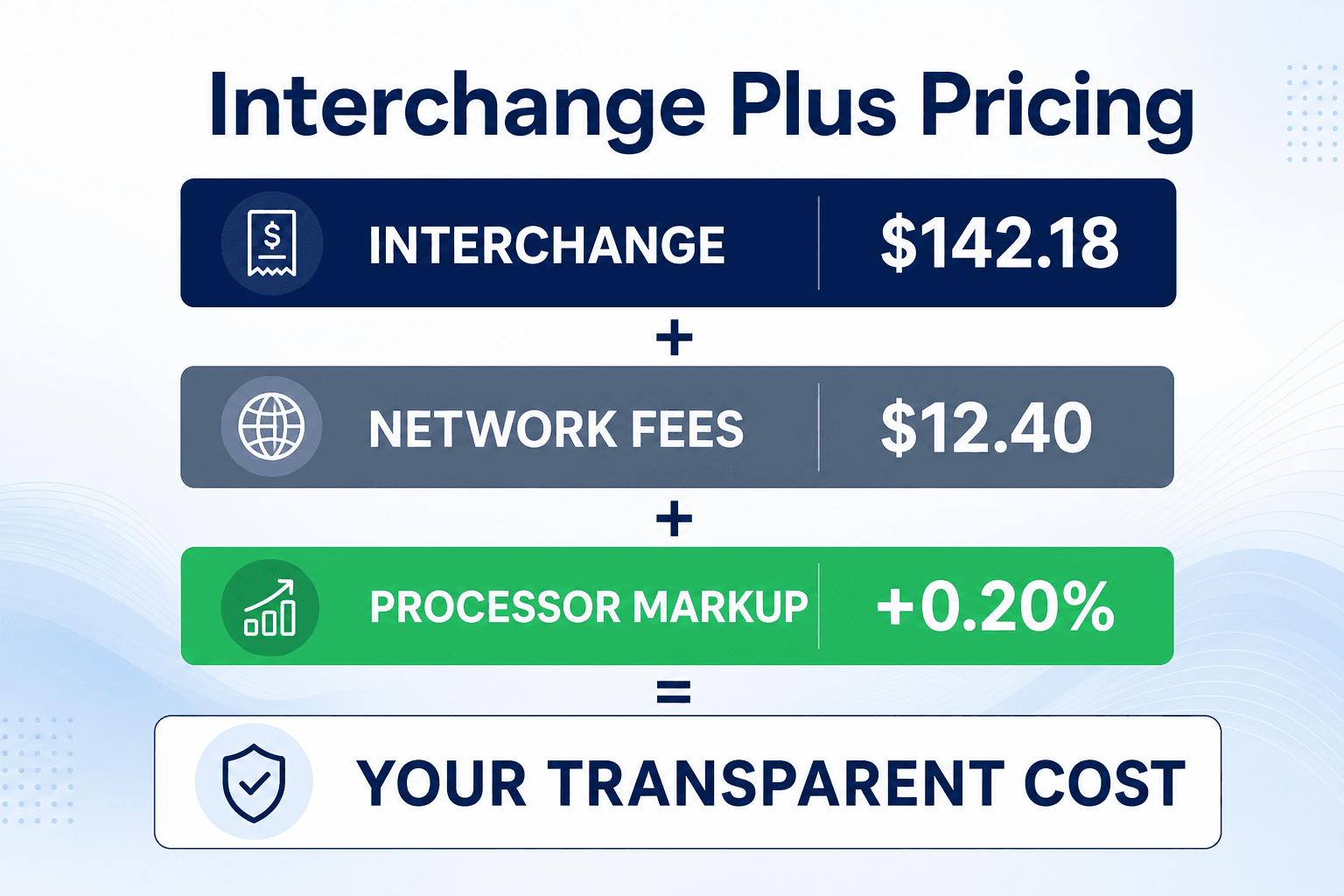
Interchange plus shows what Visa and Mastercard charged, what network fees applied, and what Croft added. No tier buckets. No mystery spread.
If you want to offset card costs at the register with posted cash and card prices, start with dual pricing. It is the program we recommend first when it fits how you sell.
Explore dual pricingChoose interchange plus when you want traditional pass-through math, detailed statements, and a fixed markup on top of real network costs. Common for higher volume, B2B, and keyed-heavy businesses.
Interchange plus breaks your cost into network charges plus one disclosed markup.
Each card type carries a network interchange cost. With interchange plus, that real cost shows on your statement instead of being hidden inside a tier.
Card brand fees are listed separately so you can see what the networks charged for that month's volume.
Your processor markup is a fixed add-on, not a mystery spread. You know what Croft earns and what the networks earned.
Most processors still sell bundled tiers. Interchange plus is the transparent alternative.
Tiered pricing
Interchange plus
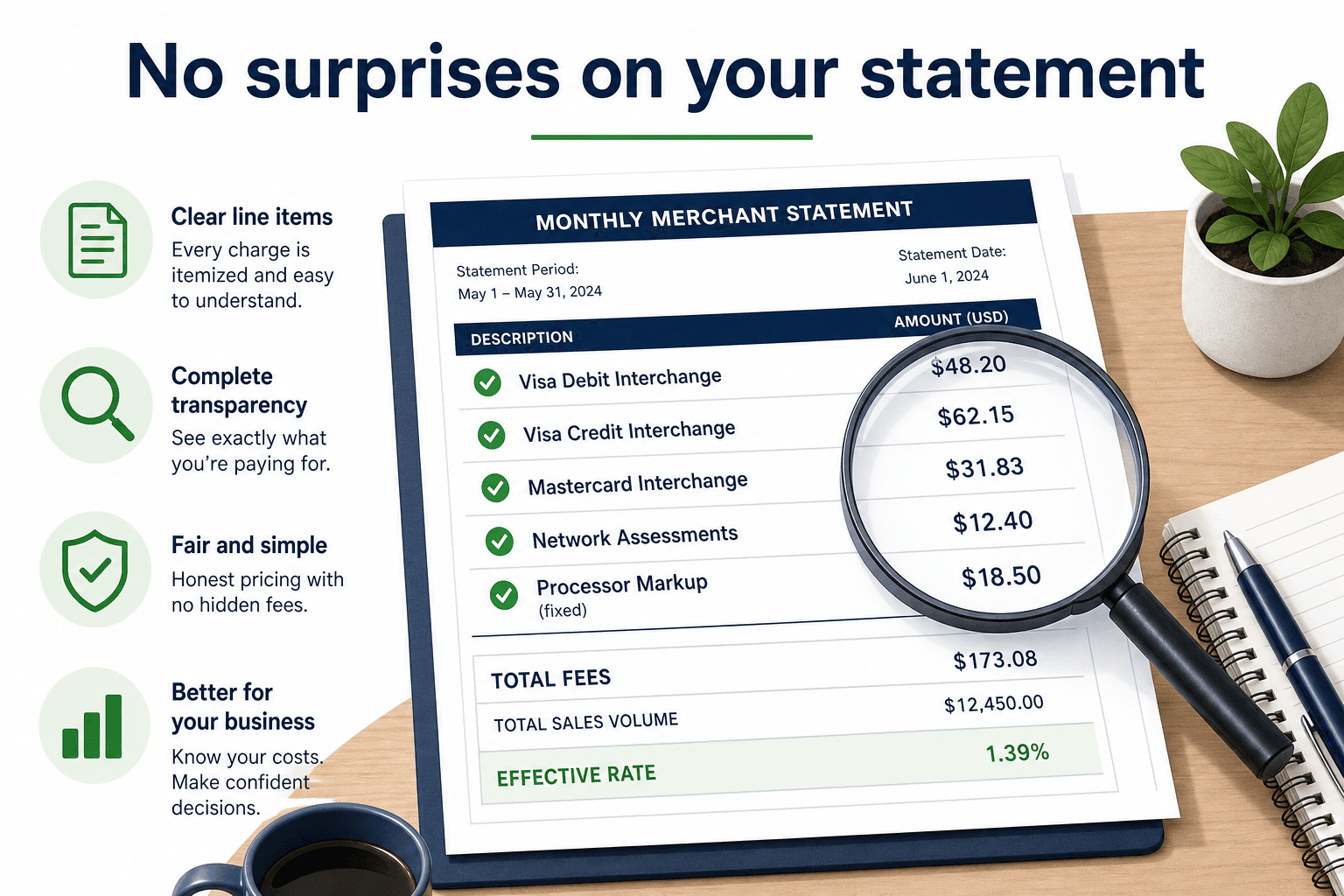
Every line should tell you what the networks charged and what your processor added.
When monthly card volume is meaningful, small markup improvements compound. Interchange plus rewards merchants who actually read their statements.
Contractors, professional services, and businesses with keyed or online payments often want pass-through pricing without register-level dual pricing.
Owners who need one transparent rate structure across locations can benchmark interchange plus across MIDs without guessing tier downgrades.
Upload your current statement. Croft maps interchange, junk fees, and markup so you see the real comparison before switching.
Straight answers on pass-through pricing and how it compares to dual pricing.
Interchange plus (also called cost-plus) passes the actual interchange and network costs from Visa and Mastercard to you, then adds a fixed processor markup. It is one of the most transparent traditional processing models.
Tiered pricing bundles network costs into qualified, mid-qualified, and non-qualified buckets. Interchange plus itemizes the real interchange for each card type so you can audit what you paid.
No. Most merchants we talk to save more with dual pricing when it fits how they sell. Interchange plus is the right conversation when you want classic pass-through math and detailed statements.
No. You still pay interchange and network costs plus markup. Dual pricing is the Croft program built to offset card acceptance costs at the register. Interchange plus is about transparency, not eliminating card costs.
Yes. Start with a free statement review at /get-started. We model dual pricing and interchange plus against what you pay today.
Merchants with higher volume, heavy B2B or keyed payments, or finance-minded owners who want line-item statements often prefer interchange plus over dual pricing.
We will review your statement and compare dual pricing and interchange plus side by side. Free, no obligation.